
Let me paint you a picture. Two years ago, I looked in the mirror and saw a tired stranger staring back. My skin wasn’t just dull; it was sullen. I had dark spots leftover from a high school acne breakout that looked like permanent freckles, and fine lines were starting to camp out around my eyes like uninvited guests. I tried brightening powders, expensive facials, and even drinking kale smoothies (yuck). Nothing worked.
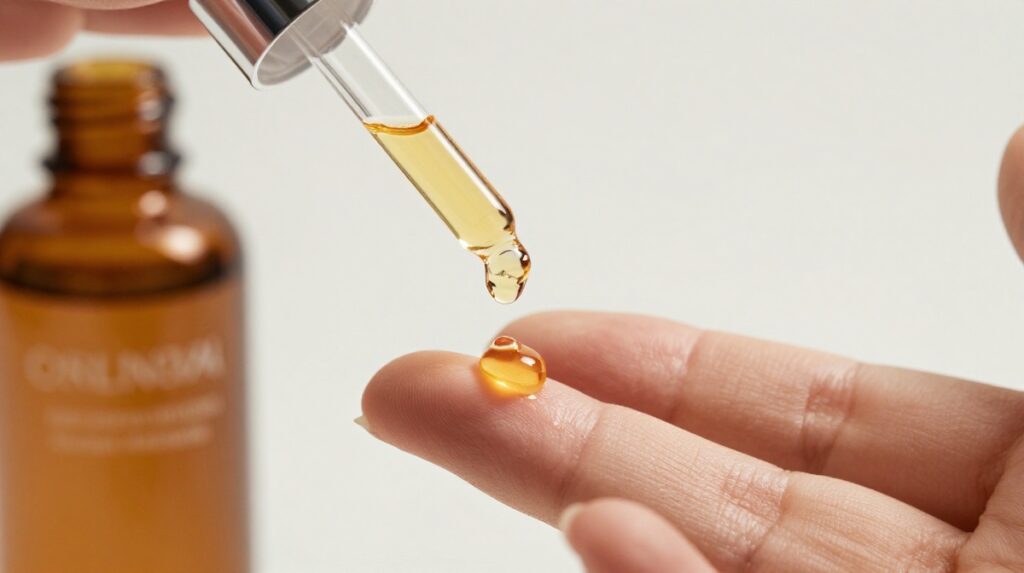
Then, a friend who worked at a dermatology clinic slid a small bottle across the coffee shop table. It was amber-colored glass with a dropper. “Just try it,” she said. “Give it three months.” That bottle was a Vitamin C serum. Honestly, I was skeptical. How could putting crushed-up vitamins on my face do what expensive creams couldn’t?
Fast forward to today. My dark spots have faded so much that I don’t wear foundation anymore. My skin actually glows—like I just came back from a vacation. That is the power of understanding the true Vitamin C serum benefits. I am not a scientist, but I have become a devoted student of this ingredient. And today, I am going to teach you everything I learned so you can buy with confidence and finally get that “glass skin” look.
What Exactly is a Vitamin C Serum? (The Simple Science)
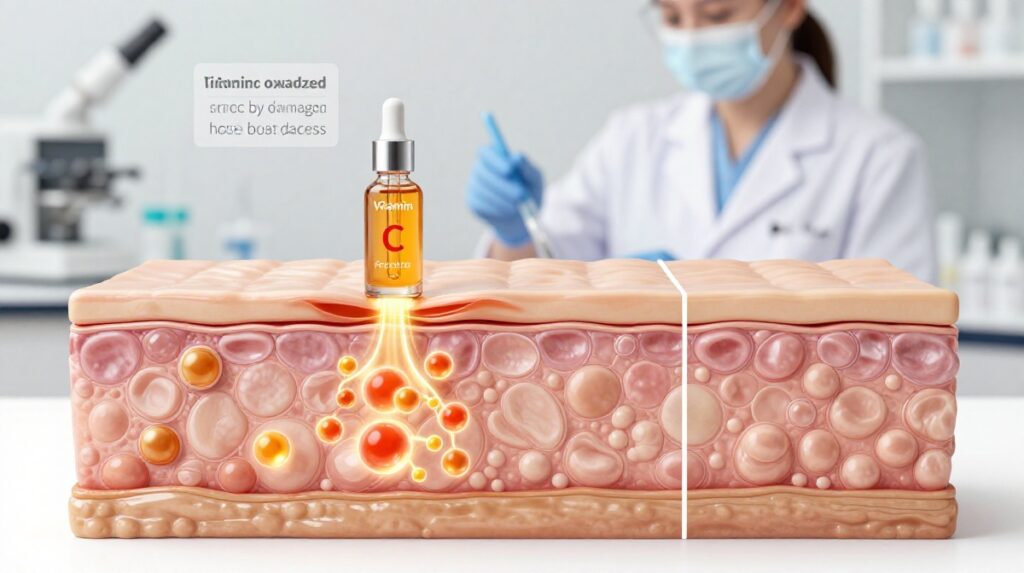
Before we dive into the magic, let’s keep it simple. Imagine your skin is a piece of fruit, like an apple. When you cut an apple and leave it out, it turns brown. That is oxidation—damage caused by the air, sun, and pollution.
Your face does the same thing, just slower. Vitamin C is like squeezing lemon juice on that apple. It stops the browning. Medically speaking, Vitamin C (also known as L-ascorbic acid) is the most plentiful antioxidant found in your skin . As a powerful antioxidant, its main job is to fight free radicals—the nasty molecules created by UV rays and smoke that tear apart your collagen .
But here is the kicker: Your body cannot produce Vitamin C on its own . You have to put it on your skin (or eat it, but topical is faster for your face). A good serum delivers this nutrient directly to your pores.
The Top Vitamin C Serum Benefits You Will Actually See

Let’s get into the good stuff. You don’t buy skincare because of chemistry; you buy it because you want to look better. Here is exactly what a Vitamin C serum does for your reflection.
1. It Turns Back the Clock on Wrinkles (Collagen Booster)

We all fear wrinkles. But did you know that wrinkles are just the result of your skin sagging from the inside out? Vitamin C is essential for the synthesis of collagen, the structural protein that keeps your skin firm and bouncy .
As we age, we produce less collagen. However, applying a Vitamin C serum tricks your skin into acting young again. It stimulates the collagen genes, telling your body to build new, tight tissue . I noticed my laugh lines softening after about eight weeks. It doesn’t happen overnight, but when it happens, it is permanent progress.
Also Read:Unlock the Glass Skin Secret: Your Guide to the Best Korean Serum
2. Goodbye Dark Spots, Hello Even Tone (Hyperpigmentation Fix)
Do you have dark spots from old pimples or sun damage? That is called hyperpigmentation. It happens when your skin produces too much melanin.
Vitamin C is a tyrosinase inhibitor—that is a fancy way of saying it stops the factory that makes dark spots . When I started using my serum, I noticed my sunspots on my cheeks didn’t just fade; they literally crumbled away over time. For anyone struggling with melasma or post-acne scars, this is arguably the most valuable Vitamin C serum benefit.
3. Sunscreen’s Best Friend (UV Protection)

Here is a secret that will save your skin: Vitamin C does not replace sunscreen, but it makes your sunscreen work 10x harder. Studies show that Vitamin C helps repair sun damage that has already happened while protecting against future damage .
Think of it as an internal bodyguard for your DNA. When you wear SPF 30 in the morning and layer Vitamin C underneath it, you are blocking the rays and neutralizing the ones that slip through. I never step out of the house without this combo now.
4. Hydration and Plumpness

Dry skin looks older. Vitamin C serums often come paired with Hyaluronic Acid, a sponge-like molecule that holds 1,000 times its weight in water . The result? Your skin looks like a grape instead of a raisin. It plumps the skin, which immediately smooths out fine lines.
Step-by-Step Guide: How to Use a Vitamin C Serum (The Right Way)
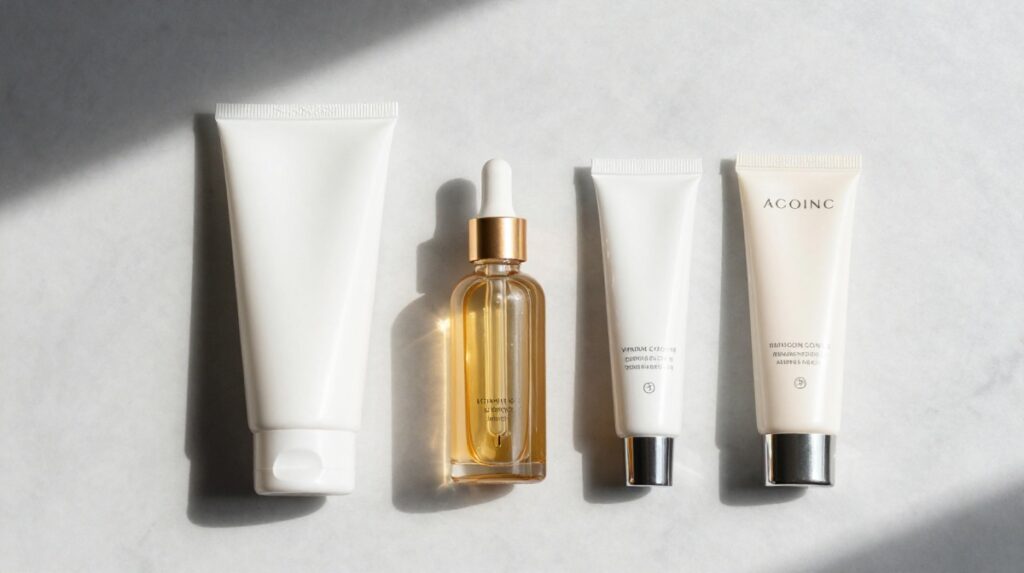
You can buy the most expensive bottle in the world, but if you use it wrong, it is worthless. Here is my foolproof, step-by-step routine for maximizing Vitamin C serum benefits.
When to use it? Morning. Always. The primary job of Vitamin C is to protect you from the day’s pollution and UV rays . Using it at night is fine, but you waste its “shield” potential.
Step 1: Cleanse Your Face
Start with a clean slate. Use a gentle, foaming or cream cleanser to remove last night’s oil and dirt. Do not proceed unless your skin is bare.
Step 2: Apply to DRY Skin (Crucial!)
While many moisturizers love damp skin, Vitamin C (specifically L-ascorbic acid) works best on dry, clean skin. High pH water can mess with the acid’s stability. Pat your face completely dry with a towel.
Step 3: The “3 Drops” Rule
Dispense 3 to 4 drops into your palm . Using more than that won’t work faster; it will just irritate your neck and waste money. Dab the drops across your forehead, cheeks, nose, and chin.
Step 4: Press, Don’t Rub
Gently press the serum into your skin. Rubbing it aggressively creates friction. Just press it in and let it absorb. Wait 60 seconds.
Step 5: Layer Your Moisturizer
Seal the deal with a moisturizer. This traps the Vitamin C inside.
Step 6: SUNSCREEN. End of story.
If you skip sunscreen, the Vitamin C will fight the UV rays alone, get used up, and you will still burn. You need SPF 30 or higher on top .
What to Look for When Buying (Avoid These Mistakes!)

To convince you to buy with confidence, you need to know how to spot a fake or useless product. Vitamin C is notoriously unstable. It is a diva ingredient—it hates light, air, and heat.
The Packaging Test:
Look for dark glass bottles (amber or cobalt blue) or airtight pumps . If the bottle is clear plastic or a jar you have to dip your finger into, run away. Every time you open it, air gets in and kills the active ingredients.
The Ingredient Check:
- Gold Standard: Look for L-Ascorbic Acid. It is the most researched and effective form .
- The Sweet Spot: Concentration should be between 10% and 20% . 10% is great for sensitive skin; 15-20% is for tough, aging skin .
- The Power Duo: The best serums also contain Vitamin E and Ferulic Acid. These two ingredients stabilize the Vitamin C and make it up to 8 times more effective .
The Smell Test: A real, high-quality Vitamin C serum might smell a little like hotdog water or metallic pennies. That is normal because there is no perfume masking the ingredients . If it smells like a tropical beach, it probably has fragrance that could irritate your skin.
Real-Life Anecdote: The “Don’t Mix” Mistake
I learned a hard lesson last year. I was in a rush and thought, “More actives = better skin.” So I mixed my Vitamin C serum with my Retinol and a BHA exfoliant. The next morning, my face looked like a tomato. It was burning, peeling, and red for a week.
Do not mix Vitamin C with Retinol, AHAs (glycolic acid), BHAs (salicylic acid), or Benzoyl Peroxide in the same routine . These combinations cause stinging and irritation because they conflict in pH levels. Instead, use Vitamin C in the morning and save your Retinol for nighttime. They are a perfect “day and night” team—just never together in the same hour.
Who Should NOT Use Vitamin C?

While everyone can benefit, some people need to be careful. If you have rosacea or extremely sensitive skin, pure L-ascorbic acid might sting too much . Look for derivatives instead: Magnesium Ascorbyl Phosphate or Tetrahexyldecyl Ascorbate (THD) . These are gentler, oil-soluble versions that don’t sting .
Always do a patch test. Put a drop behind your ear and wait 24 hours. No rash? You are good to go .
Frequently Asked Questions (FAQ)
1. How long does it take to see Vitamin C serum benefits?
You will see “glow” or hydration immediately. For dark spots and wrinkle reduction, you need consistency. Expect visible changes in 8 to 12 weeks of daily morning use.
2. Can I use Vitamin C serum every day?
Yes, absolutely. Most people use it once daily in the morning. However, if you feel stinging, start by using it every other day for a week to let your skin build tolerance .
3. Why does my Vitamin C serum turn brown or orange?
That is oxidation. It means the product has gone bad because it was exposed to air or light. If your serum turns dark brown or orange, throw it away—it will not work and may irritate your skin .
4. Do I need a prescription for a good Vitamin C serum?
No. You can find excellent, dermatologist-recommended options over the counter. Look for brands like La Roche-Posay, CeraVe, or SkinCeuticals (for a splurge) at your local drugstore .
5. Can I use Vitamin C under my eyes?
Yes, but carefully. It helps thicken the skin and reduce dark circles. However, avoid getting it inside your eye or directly on the lash line, as it can cause stinging.
Conclusion
Finding the right skincare used to feel like gambling. You throw money at a bottle and pray it works. But when it comes to Vitamin C serum, the science is rock solid. The Vitamin C serum benefits range from collagen production and wrinkle reduction to hyperpigmentation fading and sun protection.
I went from hiding my face under layers of concealer to confidently going makeup-free. My skin is brighter, smoother, and healthier than it was five years ago. To get these results, remember the rules: use it in the morning, store it in a dark bottle, pair it with SPF, and never mix it with Retinol. You don’t need a cabinet full of products. You just need this one