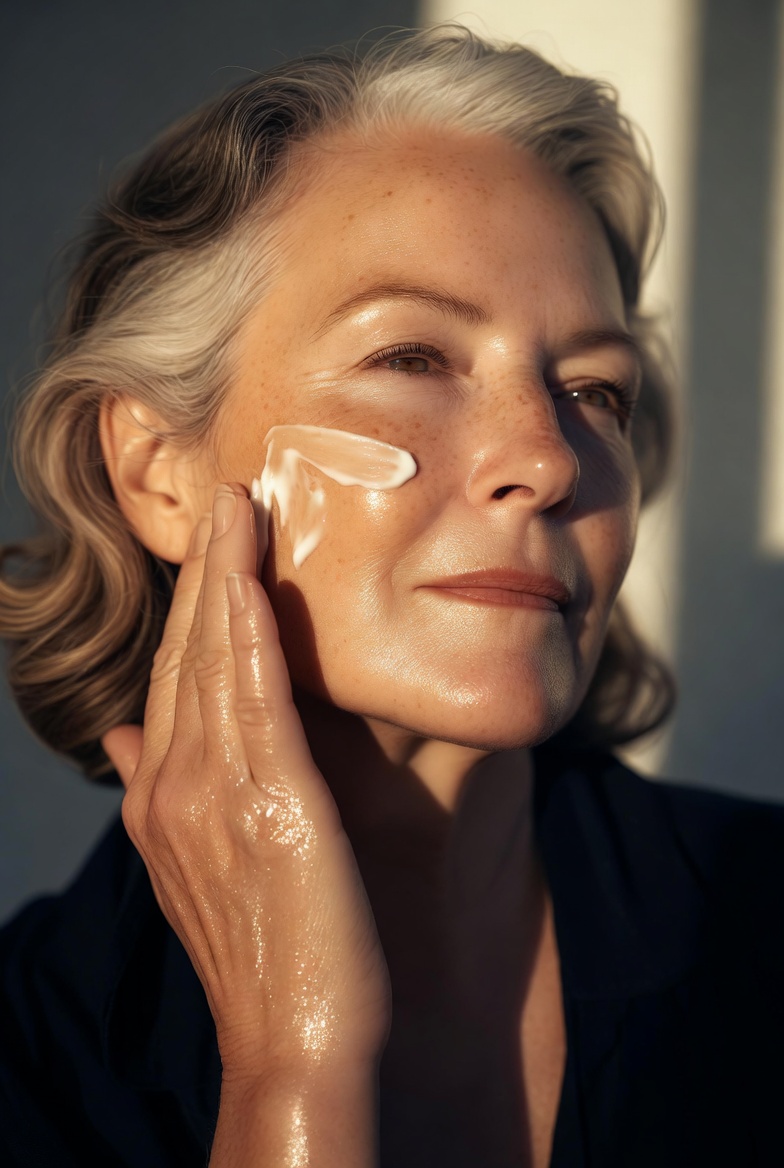

Let me tell you about the winter I turned into a human lizard. It was January, and the heater in my apartment ran non-stop. I woke up one morning, rubbed my face, and felt scales. Not pimples. Not oil. Actual rough, flaky patches that looked like dandruff on my cheeks. My hands were so cracked that a paper cut would have been a relief. I tried using my summer lotion, but it felt like pouring water on a forest fire—it evaporated in ten minutes.
I was embarrassed to shake hands at work. My makeup looked terrible because it clung to every dry flake. Sound familiar?
That miserable winter taught me a hard lesson: You cannot use the same products in December that you used in July. The cold air outside and the dry heat inside suck the moisture right out of your skin. Therefore, you need a dedicated Winter skin care routine that is richer, gentler, and smarter. After years of trial, error, and many red, stinging mornings, I have finally perfected a system. Today, I am going to walk you through every single step so you can face winter with soft, glowing, comfortable skin.
Why Winter Attacks Your Skin (The Simple Science)

First, let’s understand the enemy. Cold winter air holds very little moisture (humidity). Additionally, when you turn on your heater or radiator indoors, it blasts hot, bone-dry air that sucks water out of your skin’s outer layer.
This damage causes three specific problems:
- A compromised moisture barrier: Your skin’s protective wall cracks like old leather.
- Transepidermal water loss (TEWL): A fancy way of saying your water is escaping into the air.
- Inflammation and redness: Dry skin gets angry, itchy, and sensitive.
Therefore, your Winter skin care routine must focus on one thing above all else: Barrier repair and deep hydration. You need to switch from lightweight gels to thick creams, from foaming cleansers to creamy ones, and from occasional moisturizing to daily sealing.
Step-by-Step Guide: The Perfect Winter Skin Care Routine
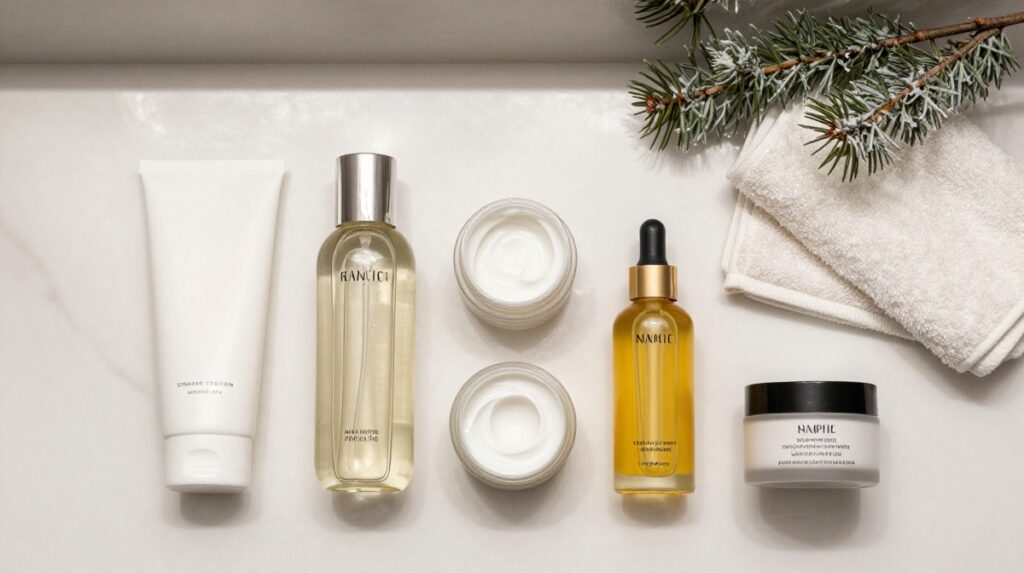
This routine works for face and body. I have broken it down into morning, night, and weekly steps. Follow this exactly, and you will see a difference in three days.
Morning Routine (Protect & Hydrate)

The morning is about creating a shield for the harsh day ahead.
Step 1: Gentle Cream Cleanser
Forget your foaming or gel cleanser. Those strip away natural oils that you desperately need. Instead, use a cream cleanser or oil cleanser. Massage it into dry skin, then add water to emulsify, then rinse. Your face should not feel “squeaky clean.” It should feel soft.
Step 2: Hydrating Toner (Optional but Amazing)
Apply an alcohol-free toner with ingredients like glycerin or rose water. This adds a layer of water back into your skin immediately after washing.
Step 3: Hyaluronic Acid Serum (On Damp Skin!)
Here is a pro trick: Hyaluronic acid is a molecule that holds 1,000 times its weight in water. But it needs existing water to grab. Apply it to damp skin, not dry skin. If you put it on dry skin in a dry room, it can actually pull water out of your skin. So keep your face slightly wet.
Step 4: Thick Moisturizer (The Heavy Lifter)
This is the most important step in your Winter skin care routine. You need a cream, not a lotion. Look for ceramides, shea butter, squalane, or jojoba oil. Apply a generous layer.
Step 5: Facial Oil (The Sealer)
If you are still feeling dry after 30 minutes, add 2-3 drops of facial oil (like marula or rosehip oil) on top. Oil seals everything in like plastic wrap.
Step 6: Sunscreen (Yes, Even in Winter)
Snow reflects up to 80% of UV rays . You can get a worse sunburn on a ski slope than on a beach. Always finish with broad spectrum SPF 30.
Also Read:Man Up to Clean Up: The Real Deal on Skin Care for Men (No Fluff, Just Results)
Night Routine (Repair & Regenerate)

Nighttime is when your skin heals itself. Your Winter skin care routine at night should be richer than the morning.
Step 1: Oil Cleanse (Double Cleanse)
Start with a cleansing oil or balm to melt off sunscreen and pollution. Then follow with your cream cleanser. This ensures your pores are clean without being stripped.
Step 2: Gentle Exfoliation (1-2 times a week)
Dead skin cells build up faster in winter because cell turnover slows down. Use a lactic acid or PHA exfoliant. Avoid harsh physical scrubs (like apricot scrub) because they cause micro-tears.
Step 3: Essence or Serum
Apply a repair serum with niacinamide (calms redness) or peptides (boosts collagen).
Step 4: Night Cream (Thicker Than Day Cream)
Use a night cream or sleeping mask. These are formulated to be heavier and often contain retinol (start slow if you are new).
Step 5: Occlusive for Dry Patches (The “Slugging” Trick)
Take a tiny amount of petroleum jelly (Vaseline) or Aquaphor and pat it onto the driest areas: around your nose, your lips, and any flaky spots. This is called slugging. It reduces water loss by 99% . I do this every night in January, and I wake up with baby-soft skin.
Real-Life Anecdote: The Hand Cream Epiphany
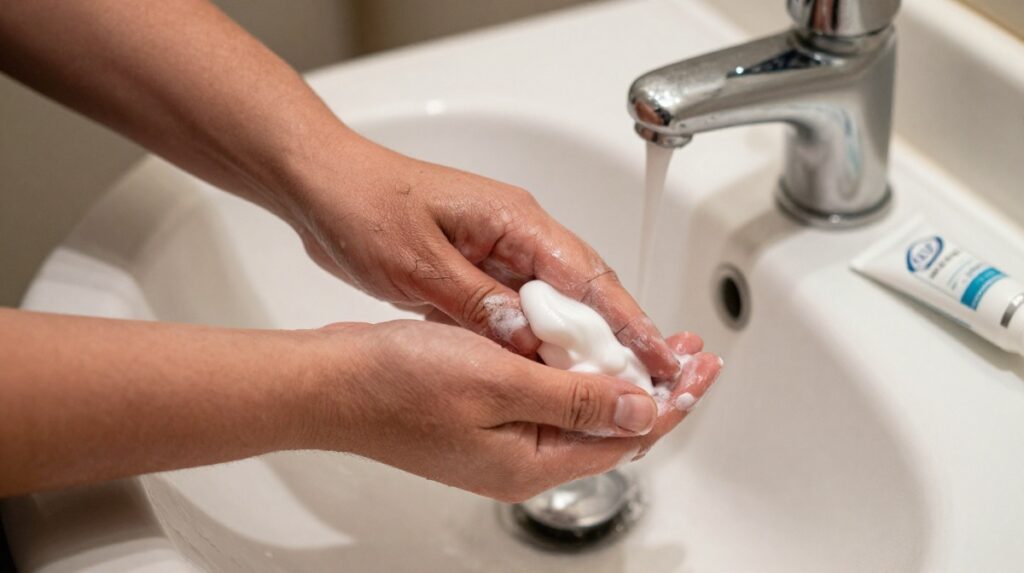
Two winters ago, my knuckles started bleeding. Literally bleeding. Every time I washed my hands, the cracks opened up like tiny paper cuts. I bought a cheap “intensive repair” lotion from the drugstore, but it burned like fire when I applied it.
I finally went to a dermatologist. She looked at my hands and said, “You are washing them too much with hot water and not moisturizing immediately after.” She gave me a simple rule: Apply moisturizer within 60 seconds of drying your hands. Keep a tube of thick cream (with ceramides and petrolatum) next to every sink in your house.
I followed her advice. Within one week, the bleeding stopped. Within two weeks, the cracks healed. Now, I keep a small tube of hand cream in my coat pocket, my car, and my desk. That small change saved my winter.
The Body Portion of Your Winter Skin Care Routine
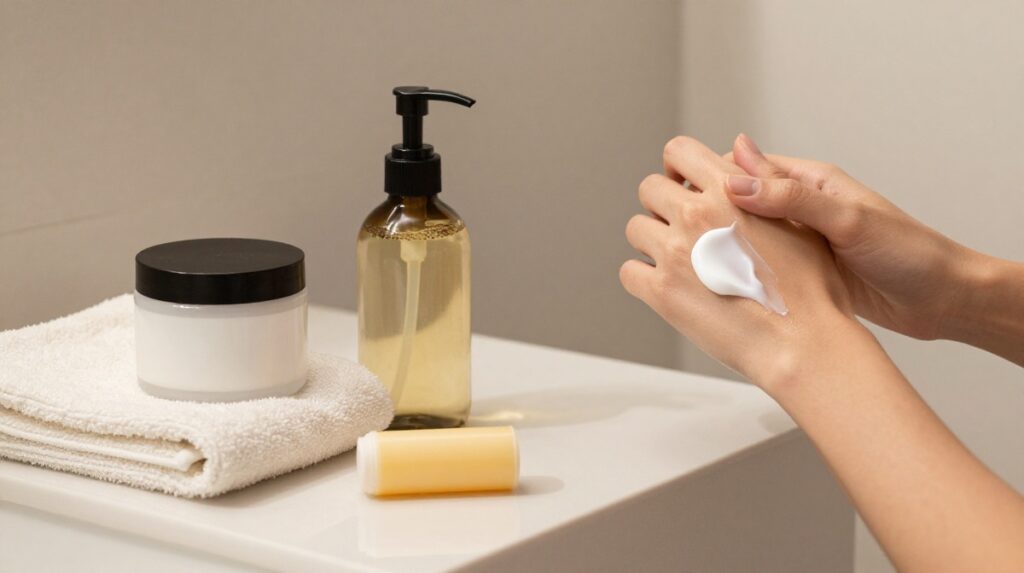
Do not forget your neck, elbows, knees, and feet. These areas have fewer oil glands and crack first.
Step-by-Step for Body:
- Shower smart: Use lukewarm water, not hot. Hot water strips oils. Limit showers to 10 minutes.
- Gentle body wash: Use a cream-based or oil-based body wash. Avoid sodium lauryl sulfate (SLS).
- Pat dry (don’t rub): Leave your skin slightly damp.
- Apply body moisturizer within 3 minutes: This locks in the water from the shower. Use a rich body butter or cream with shea butter, urea, or lactic acid.
- Don’t forget lips: Use a lanolin-based lip balm (like Lanolips or Aquaphor). Lanolin is the only ingredient that actually heals cracked lips because it mimics human oils.
What to Avoid in Winter

Just as important as what you add is what you remove.
| Avoid | Why? |
|---|---|
| Hot showers | Destroy your skin barrier and cause redness |
| Harsh exfoliants | Micro-tears become deep cracks in dry weather |
| Alcohol-based toners | Evaporate immediately, taking your natural oils with them |
| Clay masks | Suck out every drop of oil (save these for summer) |
| Fragrance-heavy products | Irritate already sensitive, dry skin |
The Best Ingredients for Your Winter Skin Care Routine

When you go shopping, look for these heroes on the label.
- Ceramides: Rebuild your skin’s brick wall. Essential for barrier repair.
- Hyaluronic acid: Pulls water into the skin. Apply to damp skin.
- Shea butter: A natural fat that softens and seals.
- Squalane: An oil that mimics your skin’s own sebum. Never greasy.
- Niacinamide: Calms redness and strengthens the barrier.
- Urea: Exfoliates and hydrates at the same time (great for feet and elbows).
- Lanolin: The gold standard for lips and cracked hands.
How to Buy Winter Skincare With Confidence

You are ready to buy. But how do you avoid wasting money on products that sting or feel greasy?
- Buy travel sizes first: Many brands offer mini versions of their rich creams. Test them for one week.
- Look for “fragrance-free” not “unscented”: Unscented products sometimes use masking fragrances that still irritate. Fragrance-free is safer.
- Check the return policy: Stores like Target, Ulta, and Sephora accept returns on used skincare. Use this to your advantage.
- Start with drugstore heroes: Brands like CeraVe, La Roche-Posay, and Vanicream are dermatologist favorites. They are affordable and effective. You do not need a $200 cream.
Weekly Treatments for Extreme Dryness
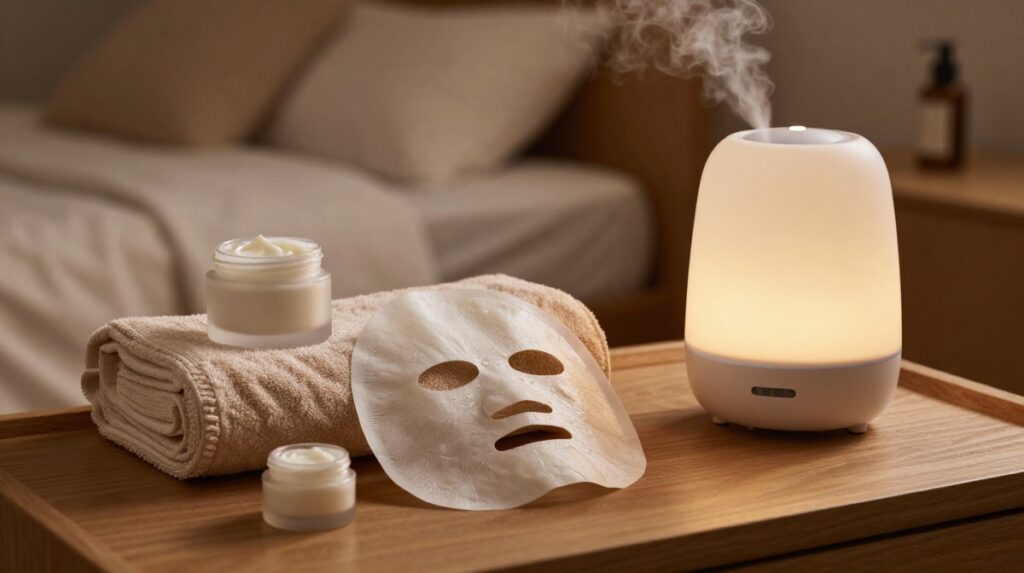
Once a week, add these two treatments to your Winter skin care routine.
Treatment 1: Hydrating Sheet Mask
Use a sheet mask with glycerin and hyaluronic acid. Leave it on for 20 minutes. Do not rinse off the extra serum; pat it into your skin.
Treatment 2: Humidifier (The Game Changer)
This is not a product you put on your skin, but it is the single best thing you can do. Run a cool-mist humidifier in your bedroom every night while you sleep. It puts moisture back into the air, so your skin doesn’t have to fight the dry heater all night. I bought a $30 humidifier, and my morning flakes disappeared within three nights.
Real-Life Anecdote: The “Less is More” Lesson

Last winter, I got overconfident. I thought, “If one active ingredient is good, five must be better.” I layered retinol, vitamin C, glycolic acid, and niacinamide all in one night. The next morning, my face looked like a tomato. It was burning, red, and swollen. I had destroyed my moisture barrier completely.
I had to strip my routine down to just cleanser, moisturizer, and petroleum jelly for two full weeks to heal. That painful experience taught me that in winter, gentle and consistent beats harsh and aggressive. You only need one active ingredient per day (retinol at night, vitamin C in the morning). Save the heavy exfoliation for summer.
Frequently Asked Questions (FAQ)
1. How is a Winter skin care routine different from summer?
In summer, you focus on lightweight, oil-free products to prevent sweat and shine. In winter, you switch to cream cleansers, thick moisturizers, and occlusives (like petroleum jelly) to prevent water loss and cracking.
2. Can I use the same moisturizer on my face and body in winter?
Technically yes, but face skin is thinner and more sensitive. Face moisturizers are formulated to be non-comedogenic (won’t clog pores). Body creams are often thicker and may cause acne on your face.
3. Why does my skin sting when I apply moisturizer in winter?
That is a sign your moisture barrier is damaged. The stinging happens because the product is penetrating into micro-cracks. Switch to a fragrance-free, ceramide-rich cream like CeraVe or Vanicream. If stinging continues for more than a week, see a dermatologist.
4. Do I really need sunscreen in my Winter skin care routine?
Absolutely. Snow reflects up to 80% of UV rays, and UVA rays (aging rays) penetrate clouds and windows just as strongly in December as in June. Use broad spectrum SPF 30 every single day.
5. How long does it take to repair dry winter skin?
With the right routine (gentle cleanser, thick moisturizer, occlusive at night), you will see improvement in 3 to 5 days. However, a completely healed moisture barrier takes about 2 to 4 weeks of consistent care.
Conclusion
Winter does not have to mean bleeding knuckles, flaky makeup, and itchy legs. I learned that lesson the hard way after years of suffering through dry, painful skin. The secret is simple: Switch your products with the seasons. A proper Winter skin care routine uses cream cleansers, hyaluronic acid on damp skin, thick ceramide moisturizers, petroleum jelly for dry spots, and a humidifier while you sleep.
You do not need a complicated 15-step routine. You need the right products used in the right order. Start tonight: wash with a cream cleanser, apply a rich night cream, and put a thin layer of Vaseline on your dry patches. Tomorrow morning, add SPF. Within one week, your skin will feel soft, calm, and comfortable again.
Stop letting winter win. Go ahead, buy that rich cream and that little humidifier. Your skin will thank you every cold morning for the rest of your life.